

Every GCAGE cage comes with more than a place for your guinea pig to live. Every order includes access to a downloadable STEM project PDF with real designs: an airplane, a helicopter, a robot, a satellite, and a windmill. When the old cage comes down, print the PDF at home on regular letter-size paper, cut out the printed pattern, and use it as a template to cut matching shapes from the cardboard. No fancy supplies to buy and no online tutorial to hunt down. Just a home printer, some scissors and tape, and about 20 to 40 minutes.
Best part: GCAGE releases a brand new, unique downloadable STEM project every month, so the lineup keeps growing well past these five. Families never run out of new things to print and build.
It is a small shift, but it changes how cage day feels for a lot of families. Instead of the old cage going straight into the bin, it gets a second job first. That second job happens to be one that keeps kids busy, off screens, and proud of something they made with their own hands.
Here is what each of the five downloadable projects teaches, and how to get the most out of build day.
In This Article
The Airplane
The airplane template turns flat cage cardboard into wings, a body, and a tail fin, all traced and cut using the printable guide instead of guesswork. Kids fold and tape the pieces together, then test how the finished plane flies or glides. This build is a simple, hands-on way to talk about balance and symmetry: a plane with lopsided wings behaves differently than one that is cut evenly, and kids notice that fast. Let your child test a few gentle throws indoors and compare how small changes to the wings change the flight.
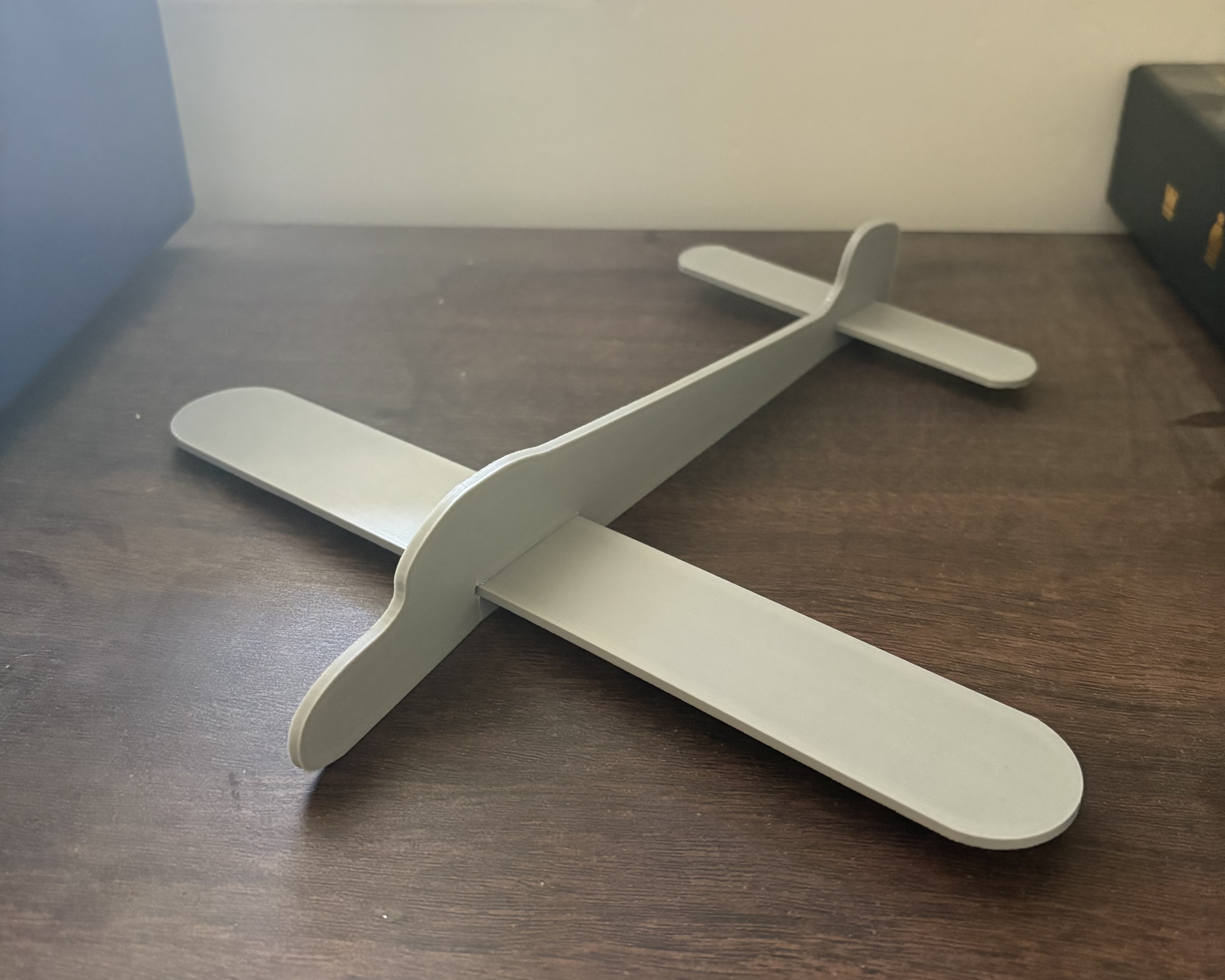
(Colored white for a clear visual)
The Helicopter
The helicopter template gives the body a tail boom and a tail fin, plus a rotor-style wing piece that mounts across the top on two support legs so it can stand on its own. Kids trace, cut, and tape the pieces together, then set it down and give the blade a spin. It is a simple way to talk about how a helicopter balances a spinning rotor up top with a tail fin in back to keep the body from spinning too. Let your child test how the helicopter balances on its two legs, and adjust the angle of the tail fin to see how the look and stability change.
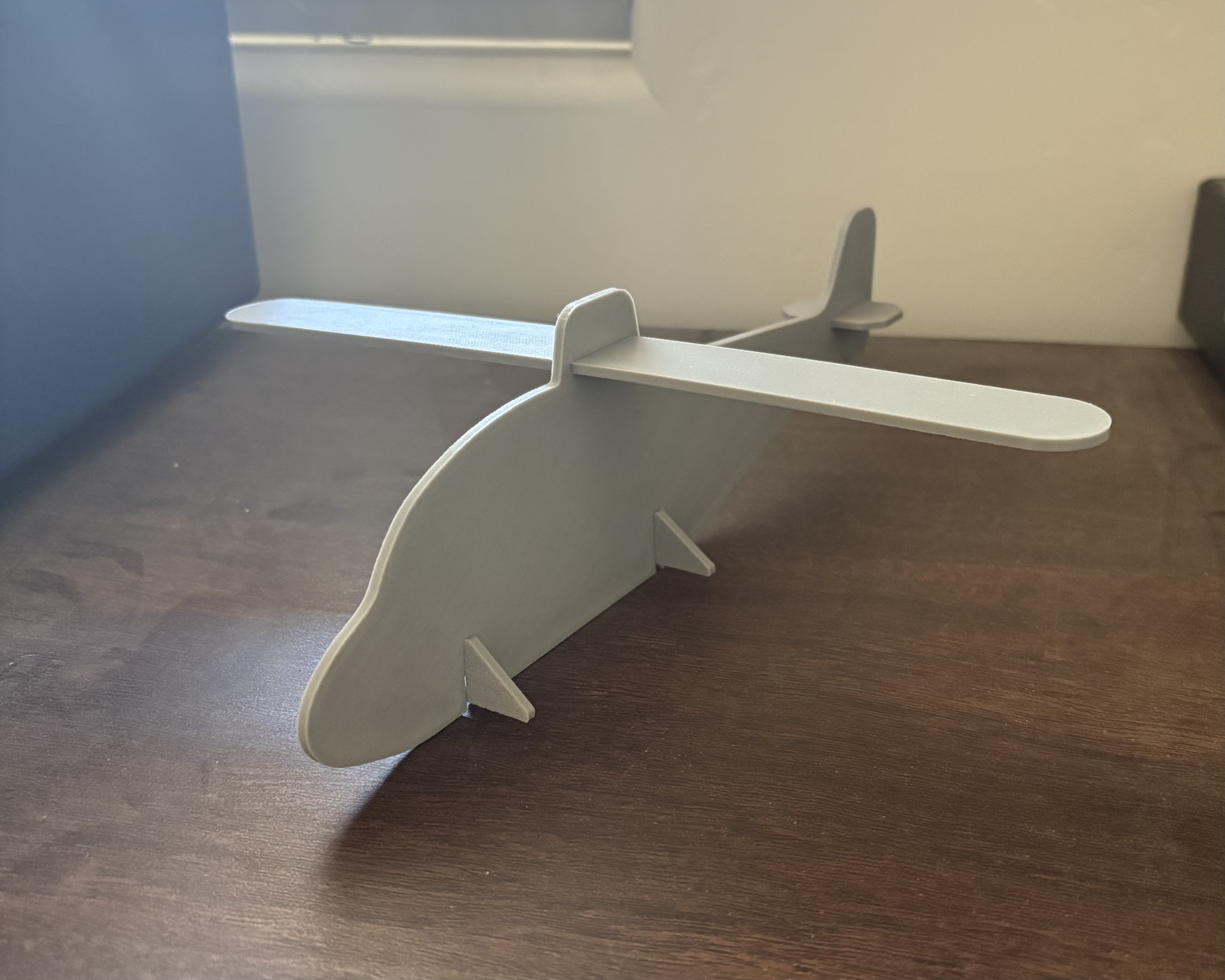
(Colored white for a clear visual)

A fresh cardboard cage every two weeks, plus access to a downloadable, printable STEM project guide, with a brand new design added every month.
The Robot
The robot template gives kids a body, a head, and a set of limbs to cut and assemble from cage cardboard, then decorate however they like. This is the build that gets the most personality added to it: bottle caps as buttons, marker-drawn control panels, a name and a job. Beyond the fun factor, it is a gentle introduction to how a robot is really just a set of connected parts built for a purpose. Every part has a role, and taking it apart to see how the pieces fit together is half the fun for curious kids. Ask your child what job their robot should have around the house. It turns a craft into a character, and characters get played with a lot longer than a plain box does.
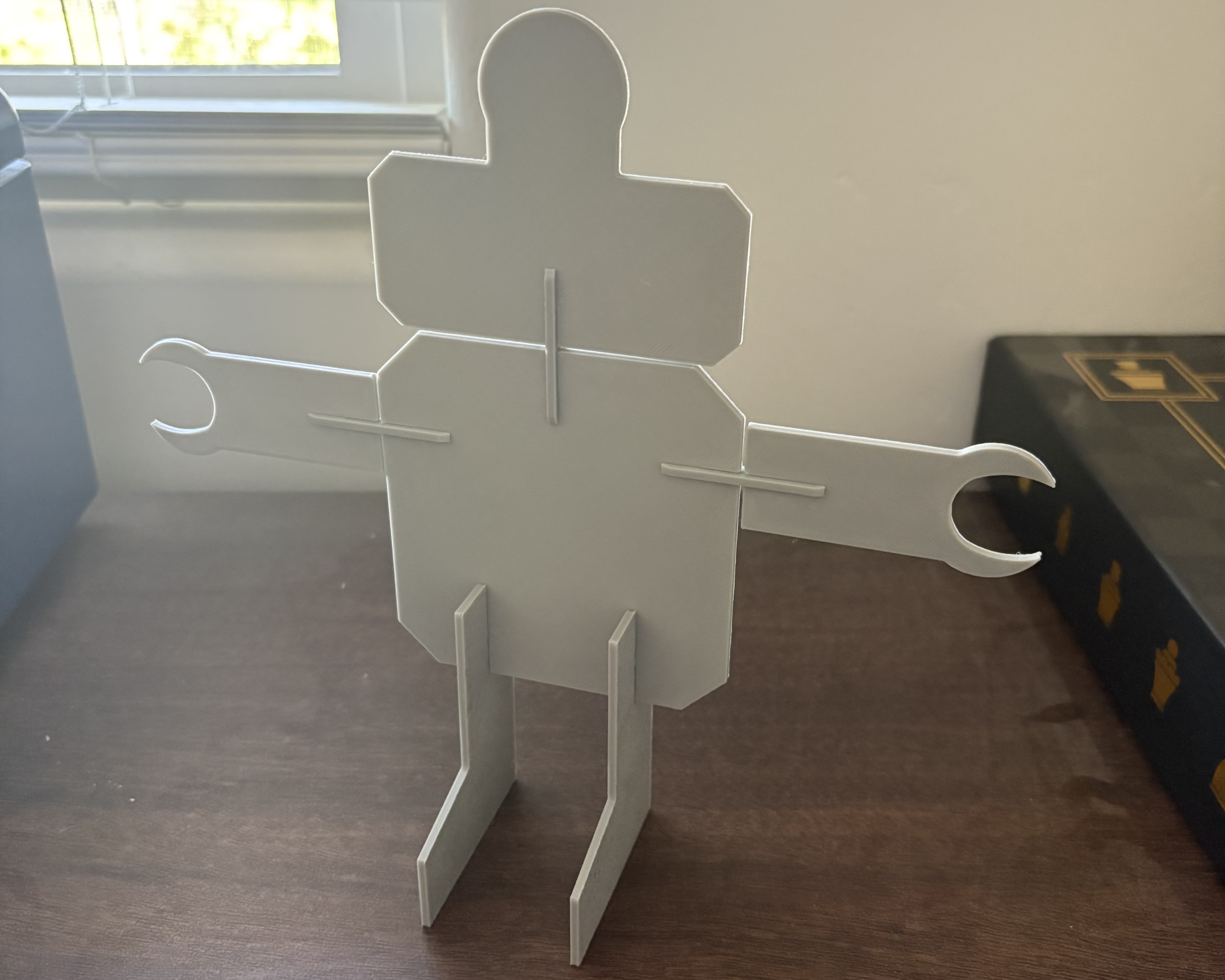
(Colored white for a clear visual)
The Satellite
The satellite template centers on a round dish cut from cage cardboard, mounted on a center rod alongside a solar-panel-style wing and a small stabilizer fin. Kids cut the round dish, the wing, and the fin, then assemble them around the rod. It is a fun jumping-off point for talking about how real satellites use a dish shape to send and receive signals and flat panels to catch sunlight for power. Ask your child to point the dish at an imaginary planet and make up what signal it might be picking up.
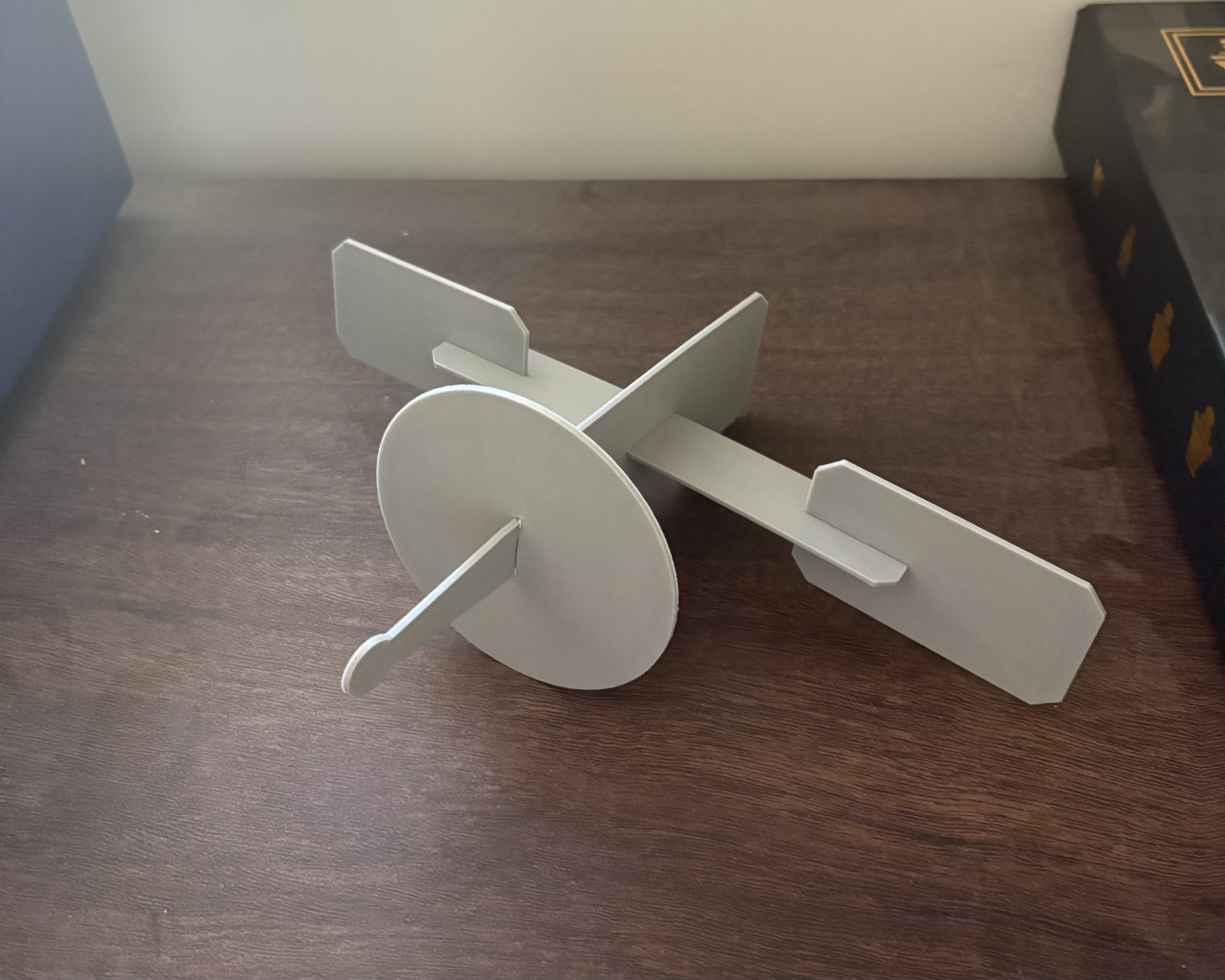
(Colored white for a clear visual)
Two flat-packed cages delivered every two weeks. No scrubbing, no smell, and a new downloadable STEM template to print each time the old cage comes down.
The Windmill
The windmill template is the most dynamic of the five builds. Four blades cut in an X shape mount on a pivot at the center of a small tower base, with a fantail piece at the back, just like a real windmill uses to turn and face the wind. Kids cut the tower, the four blades, and the fantail, then assemble the pivot so the blades can spin freely. It is a hands-on way to see how wind pushes on angled blades to create spinning motion. Give the windmill a gentle blow and watch the blades turn.
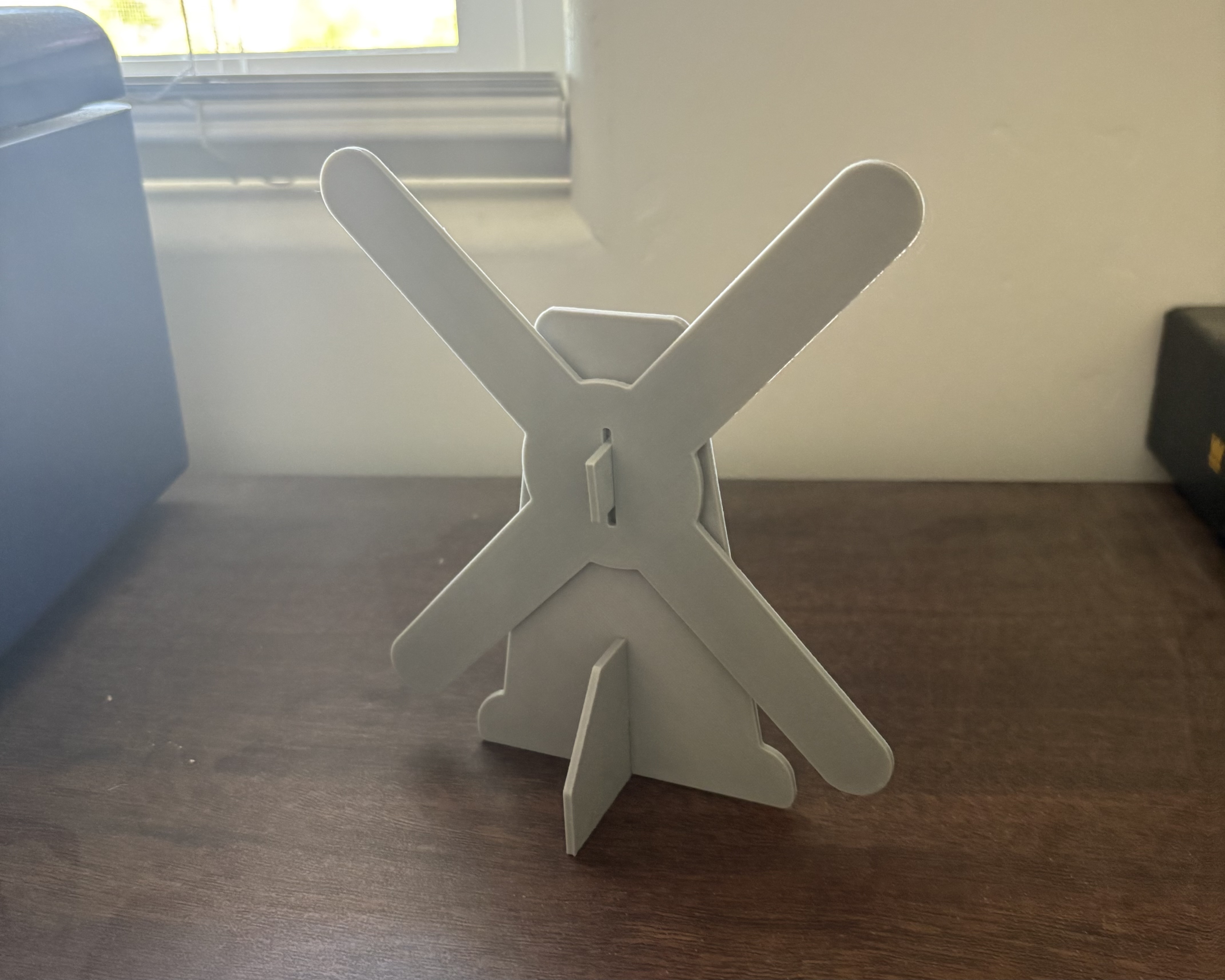
(Colored white for a clear visual)
Frequently asked questions
Do all GCAGE cages include the same 5 STEM projects?
Every GCAGE order gives you access to the downloadable STEM guide covering the airplane, helicopter, robot, satellite, and windmill designs to start. On top of that, GCAGE adds a brand new, unique downloadable project every month, so there is always something fresh in the lineup.
How do I get the STEM project templates?
Each design is a printable PDF you download and print at home on regular letter-size paper. Cut out the printed pattern, then use it as a template to trace and cut matching shapes from your cage cardboard.
Will there be new STEM projects besides these 5?
Yes. GCAGE releases a new downloadable cardboard STEM design every month, so families who stay on the subscription keep unlocking fresh builds long after they have finished all five of the originals.
Which STEM project should we build first?
There is no wrong order. Many families start with the airplane or helicopter since both have a clear "does it work" test the moment the build is done. The robot, satellite, and windmill tend to hold attention longer since there is more decorating and assembly involved. Rotating through all five over a few cage cycles keeps the activity feeling new each time.
What age are these STEM projects designed for?
Most families find these builds work well for kids around 5 to 12 years old. Younger kids may need help with cutting and taping, while older kids can usually follow the printable template on their own.
Do I need extra materials beyond the cage cardboard?
You will need a printer and regular letter-size paper to print the PDF template, plus scissors and tape to cut and assemble it. A hot glue gun can speed things up for older kids, but it is optional, not required.
Is the old cage cardboard safe to reuse for crafts?
As a general practice, only reuse pieces that are dry, free of soiling, and odor-free, and always have kids wash their hands after crafting. If a section looks or smells dirty, skip it and use a fresh piece instead.
Research on the value of hands-on STEM play at home is summarized from Boys & Girls Clubs of America and The Chemistry Blog. For more on cutting cage cleaning time down to minutes, read our post on the 5-minute guinea pig cage routine.
Turn cage day into craft day
GCAGE delivers two fresh disposable cages every two weeks, plus access to a downloadable, printable STEM guide, with a brand new project design every month. No scrubbing. No smell. Just a clean cage and a real project for your kid to print and build.
Shop GCAGE cages →Subscription from $64.95 per delivery, or $68.37 for a one-time cage. GCAGE is not a veterinary source; for health questions about your guinea pig, check with a vet or exotic pet specialist.